
Running a Shopify SEO store gives you a powerful platform for selling products online, but simply adding products and launching your store does not guarantee organic traffic or sales.
If your potential customers cannot find your products in search engines, you may be missing valuable opportunities to grow your ecommerce business.
This is where Shopify SEO becomes important.
Shopify SEO is the process of optimizing your Shopify store so search engines can better discover, understand, and rank your pages. A well-planned Shopify SEO strategy can help your store attract more relevant organic traffic, reach potential customers, and increase ecommerce sales.
In this guide, we’ll explain what Shopify SEO is, why it matters, and the most effective ways to improve your store’s organic visibility and rankings.
What Is Shopify SEO?
Shopify SEO refers to the process of optimizing a Shopify ecommerce store for search engines.
The goal is to help search engines understand your:
- Products
- Collections
- Categories
- Blog posts
- Store structure
- Content
- Business information
A Shopify SEO strategy can include:
- Keyword research
- Product page optimization
- Collection page optimization
- Meta title and description optimization
- URL optimization
- Internal linking
- Image optimization
- Technical SEO
- Mobile optimization
- Website speed optimization
- Content marketing
- Structured data
- Link building
The ultimate goal is not simply to rank higher. It is to attract people who are genuinely interested in your products and are more likely to become customers.
Why Is Shopify SEO Important?
Paid advertising can generate traffic quickly, but ecommerce businesses often need to continually spend money to maintain that traffic.
Organic search can provide a more sustainable source of visitors over time.
A strong Shopify SEO strategy can help you:
- Increase organic traffic
- Improve Shopify rankings
- Reach customers actively searching for products
- Increase product visibility
- Generate qualified visitors
- Reduce dependence on paid advertising
- Build long-term search visibility
- Increase potential sales
For ecommerce businesses, SEO can be particularly valuable because many searches have strong purchasing intent.
For example, someone searching for:
“buy wireless headphones online”
is likely much closer to making a purchase than someone searching for:
“what are wireless headphones?”
Understanding this difference is an important part of ecommerce SEO.
Shopify SEO vs Traditional SEO
Shopify SEO follows many of the same principles as traditional SEO, but ecommerce stores have additional challenges.
A Shopify store may contain:
- Hundreds of product pages
- Multiple collections
- Product variants
- Filters
- Sorting parameters
- Duplicate or similar content
- Product images
- Reviews
- Dynamic URLs
This makes website structure and technical optimization especially important.
A successful Shopify SEO strategy needs to balance search engine visibility with a smooth shopping experience.
10 Ways to Improve Shopify SEO
1. Perform Keyword Research
Keyword research should be the foundation of your Shopify SEO strategy.
Before optimizing product and collection pages, identify the terms potential customers use when searching for your products.
For example, a store selling running shoes might target keywords such as:
- Running shoes for men
- Women’s running shoes
- Best running shoes
- Lightweight running shoes
- Trail running shoes
But keyword research should not focus only on search volume.
Consider:
- Search intent
- Relevance
- Competition
- Product demand
- Commercial intent
The best keyword is not necessarily the one with the highest search volume. It is the one that can attract the right audience and support your business goals.
2. Optimize Product Pages
Product pages are some of the most valuable pages on an ecommerce website.
Each product page should clearly communicate:
- Product name
- Features
- Benefits
- Specifications
- Pricing
- Availability
- Shipping information
- Relevant images
- Customer information or reviews where applicable
Avoid copying generic manufacturer descriptions when possible.
Instead, create unique product descriptions that explain why the product is useful and answer questions potential customers may have.
Use relevant keywords naturally throughout the page.
3. Optimize Shopify Collection Pages
Collection pages can be powerful landing pages for ecommerce SEO.
Instead of optimizing only individual products, create useful collection pages around meaningful categories.
For example:
example.com/collections/mens-running-shoes
can target a broader category than an individual product page.
A well-optimized collection page can include:
- A clear title
- Relevant introductory content
- Helpful category information
- Appropriate internal links
- Relevant products
- Optimized metadata
Avoid adding large amounts of unnecessary text simply to target keywords.
The content should help customers understand the collection and make purchasing decisions.
4. Write Better Meta Titles and Descriptions
Meta titles and descriptions help communicate what your pages are about.
A strong title should be:
- Relevant
- Descriptive
- Unique
- Concise
- Focused on the page’s main topic
For example:
Running Shoes for Men | Lightweight & Comfortable
is more informative than:
Products | Store
Your meta description should clearly communicate what the visitor can expect from the page.
Although search engines may generate their own snippets in some situations, well-written metadata can still help communicate the page’s value.
5. Improve Your Shopify URL Structure
Clean URLs are easier for users and search engines to understand.
A product URL should ideally be simple and descriptive.
For example:
example.com/products/black-running-shoes
is easier to understand than a URL containing unnecessary or confusing parameters.
Avoid changing established URLs without a good reason.
If URLs need to be changed, use appropriate redirects to help visitors and search engines reach the correct destination.
6. Build a Strong Internal Linking Structure
Internal links connect different pages within your Shopify store.
For example, a blog post about choosing running shoes could link to a relevant running shoe collection.
A collection page could link to individual products.
Internal linking can help:
- Visitors discover products
- Search engines discover pages
- Establish relationships between content
- Improve website navigation
- Support important pages
Use descriptive and natural anchor text.
Do not add internal links simply to increase the number of links on a page.
7. Optimize Product Images
Images are essential for ecommerce websites because customers want to see what they are buying.
However, large image files can slow down your store.
Before uploading images:
- Resize them appropriately
- Compress large files
- Use suitable image formats
- Use descriptive filenames
- Add useful alt text when appropriate
For example, instead of:
IMG001.jpg
use a descriptive filename related to the actual product.
Alt text should describe the image accurately when it provides meaningful information. Avoid keyword stuffing.
8. Improve Shopify Store Speed
Website performance matters for both users and ecommerce businesses.
If your store takes too long to load, visitors may leave before viewing products or completing a purchase.
Common factors that can affect Shopify performance include:
- Large images
- Excessive apps
- Heavy themes
- Third-party scripts
- Tracking tools
- Unnecessary code
- External resources
You can improve performance by:
- Optimizing images
- Removing unnecessary apps
- Limiting third-party scripts
- Using a well-optimized Shopify theme
- Reviewing unnecessary tracking resources
- Monitoring Core Web Vitals
Performance optimization should be approached carefully because removing useful functionality can also affect the shopping experience.
9. Create Helpful Ecommerce Content
A Shopify store should not rely only on product pages.
Creating helpful content can allow your business to target informational searches that potential customers make before purchasing.
You can create:
- Buying guides
- Product comparisons
- How-to articles
- Product care guides
- Frequently asked questions
- Industry guides
- Troubleshooting articles
For example, a store selling coffee equipment could publish:
“How to Choose the Right Coffee Grinder for Your Home”
That article could naturally guide readers toward relevant products.
This approach can help connect informational content with commercial pages.
10. Build High-Quality Backlinks
Backlinks are links from other websites to your website.
Relevant and trustworthy backlinks can contribute to your site’s authority and visibility.
For an ecommerce business, link-building opportunities may include:
- Industry publications
- Product reviews
- Relevant blogs
- Digital PR
- Business partnerships
- Useful resources
- Expert contributions
Focus on earning relevant, high-quality links rather than purchasing large numbers of low-quality backlinks.
Shopify Technical SEO
Technical SEO is an important part of Shopify optimization.
A technically healthy store makes it easier for search engines to crawl and understand your website.
Important areas include:
- Crawlability
- Indexing
- Canonical URLs
- XML sitemaps
- Robots.txt
- Redirects
- Structured data
- Mobile usability
- Page performance
- Duplicate content
Because ecommerce websites can contain many URLs, technical problems can become more complicated as a store grows.
Regular technical monitoring can help identify problems early.
Shopify SEO and Duplicate Content
Ecommerce stores can sometimes create multiple URLs that lead to similar or identical content.
This can happen because of:
- Product variants
- Collection filtering
- Sorting
- Tracking parameters
- Duplicate product descriptions
- Multiple paths to products
A good technical SEO strategy should identify unnecessary duplicate URLs and ensure search engines can understand the preferred versions of important pages.
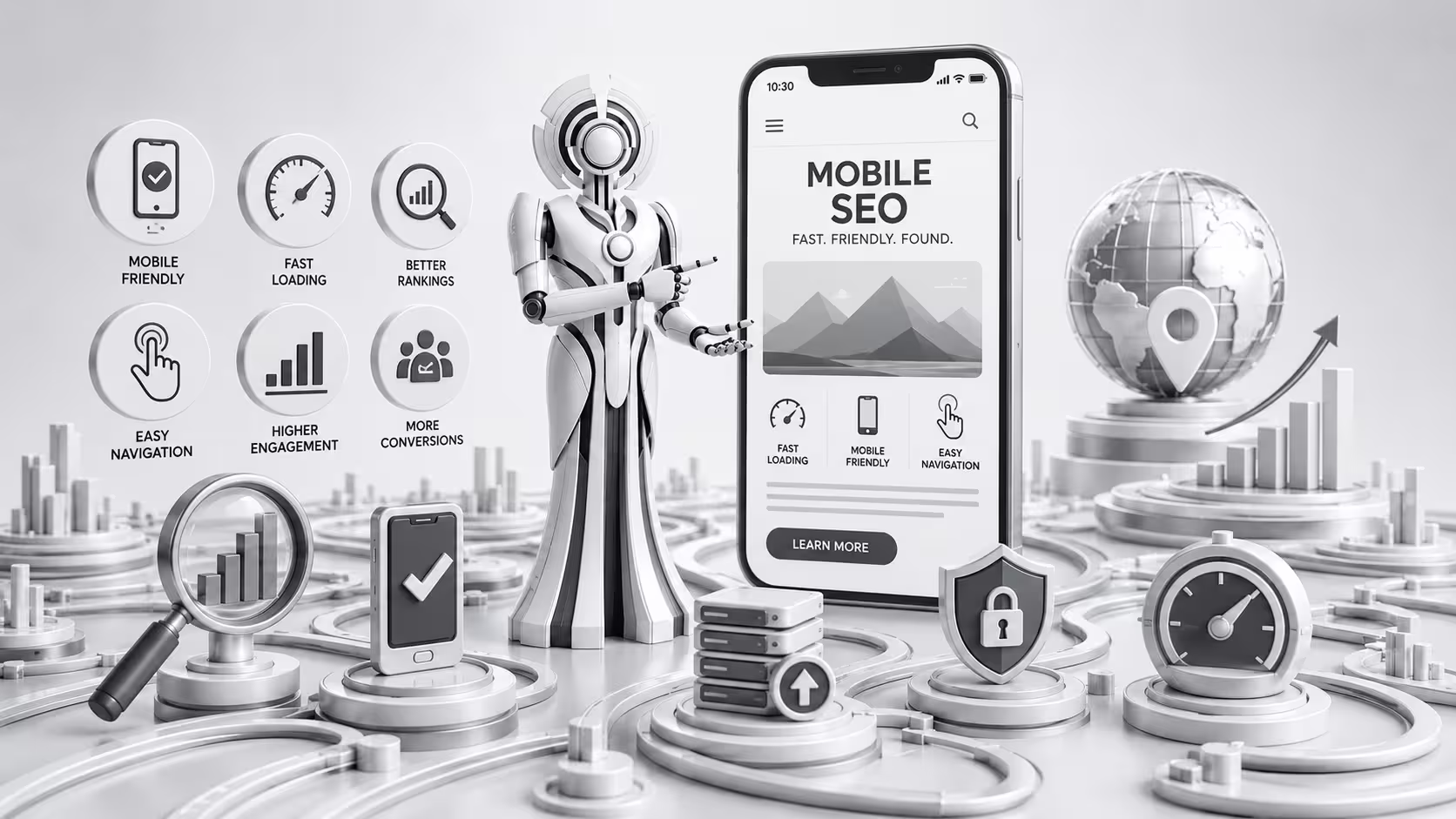
Shopify Mobile SEO
Many ecommerce customers browse and shop using smartphones.
Your Shopify store should therefore provide a strong mobile experience.
Check that:
- Product images display correctly
- Text is readable
- Buttons are easy to tap
- Navigation works smoothly
- Product filters are usable
- Checkout works properly
- Pages load efficiently
A mobile-friendly store can make the shopping experience much easier for customers.
Shopify SEO for Product Variants
Many Shopify stores offer products in different:
- Colors
- Sizes
- Materials
- Styles
- Configurations
Variants can create additional considerations for ecommerce SEO.
You should ensure that search engines can understand the primary product page and that your store does not unnecessarily create large numbers of low-value or duplicate URLs.
Your main product page should provide comprehensive information about available variants.
Shopify Blog SEO
Shopify includes blogging functionality that can be used to attract informational search traffic.
A good ecommerce blog strategy should focus on topics related to your products and customer needs.
For example, a skincare store could publish:
- How to Build a Simple Skincare Routine
- How to Choose a Moisturizer
- Common Skincare Mistakes
- Ingredients to Look for in a Cleanser
These articles can then naturally link to relevant products and collections.
The goal should be to educate customers rather than publish content solely for search engines.
How to Improve Shopify Rankings
Improving Shopify rankings requires consistent work across multiple areas.
Focus on:
Relevant Keywords
Target search terms that match your products and customer intent.
Strong Product Pages
Provide detailed, useful, original product information.
Optimized Collection Pages
Create valuable category pages that help customers discover products.
Technical SEO
Make sure important pages can be crawled and indexed properly.
Internal Linking
Connect related products, collections, and content.
Website Performance
Improve loading speed and overall page experience.
Mobile Experience
Make shopping easy on smartphones.
Quality Content
Answer customer questions through helpful guides and articles.
Authority
Build genuine relationships and earn relevant backlinks.
SEO is most effective when these areas work together.
What Are Shopify SEO Services?
Shopify SEO services are professional services designed to improve a Shopify store’s organic search visibility and performance.
Depending on your store, Shopify SEO services may include:
- Shopify SEO audits
- Keyword research
- Product page optimization
- Collection page optimization
- Technical SEO
- Shopify optimization
- Content strategy
- Internal linking
- Image optimization
- Website performance optimization
- Structured data
- Ecommerce SEO
- Link building
- SEO reporting
Professional support can be especially useful for large stores, competitive industries, store migrations, and websites experiencing traffic or ranking problems.
Common Shopify SEO Mistakes to Avoid
Using Manufacturer Product Descriptions
Copying descriptions directly from manufacturers can make your product pages less distinctive.
Create useful, original descriptions whenever possible.
Ignoring Collection Pages
Collection pages can target valuable category-level searches. Do not focus exclusively on individual product pages.
Installing Too Many Apps
Apps can provide useful functionality, but unnecessary apps may add scripts or resources that affect performance.
Review your installed apps regularly.
Keyword Stuffing
Using the same keyword excessively can make content unnatural.
Write for customers first and use relevant terms naturally.
Ignoring Mobile Users
Always test your store on smartphones and tablets.
Buying Low-Quality Backlinks
Large numbers of irrelevant or spammy links can create more problems than benefits.
Focus on quality and relevance.
Changing URLs Without Proper Redirects
URL changes should be planned carefully to avoid broken links and unnecessary loss of existing search signals.
How Long Does Shopify SEO Take?
There is no guaranteed timeline for SEO results.
The time required can depend on:
- Competition
- Industry
- Website age
- Domain authority
- Number of products
- Content quality
- Technical condition
- Existing backlinks
- Target keywords
- SEO consistency
Some improvements may produce results sooner, while competitive product and category keywords can require a longer-term strategy.
SEO should be treated as an ongoing investment rather than a quick traffic solution.
How to Measure Shopify SEO Success
Traffic alone does not tell the complete story.
Useful Shopify SEO metrics include:
- Organic traffic
- Organic revenue
- Organic conversions
- Search impressions
- Click-through rate
- Keyword rankings
- Product page visibility
- Collection page traffic
- Leads or enquiries
- Conversion rate
For an ecommerce store, organic revenue and conversions are often more meaningful than traffic alone.
A successful SEO strategy should ultimately contribute to business growth.
Frequently Asked Questions About Shopify SEO
Is Shopify good for SEO?
Yes. Shopify provides a strong foundation for ecommerce SEO, but stores still require optimization of content, product pages, collection pages, technical elements, performance, and website structure.
Can Shopify SEO increase sales?
SEO can help attract more relevant visitors to your store. If those visitors find useful products, clear information, competitive offers, and a good shopping experience, increased organic traffic can contribute to more sales.
However, SEO itself cannot guarantee a specific number of sales.
Do Shopify stores need SEO?
If you want to attract customers through unpaid search results, SEO can be highly valuable. Without optimization, your store may miss opportunities to appear for relevant searches.
How do I improve my Shopify rankings?
Start with keyword research, optimize product and collection pages, improve technical SEO, strengthen internal linking, improve website performance, create useful content, and build relevant authority.
Do product descriptions affect Shopify SEO?
Product descriptions help search engines and customers understand your products. Unique, useful, and relevant descriptions can contribute to a stronger ecommerce SEO strategy.
Is Shopify SEO different from WordPress SEO?
The core principles are similar, but Shopify has its own ecommerce structure and technical considerations. Product pages, collections, variants, apps, and Shopify’s platform-specific features all need to be considered.
Final Thoughts
Shopify SEO is an essential part of building long-term organic visibility for an ecommerce store.
Simply launching a Shopify website and adding products is not enough. Your store needs optimized product pages, useful collection pages, strong internal linking, fast performance, mobile usability, technical SEO, helpful content, and a trustworthy online presence.
By following a consistent Shopify optimization strategy, you can improve your chances of attracting relevant organic traffic and turning search visitors into customers.
If your store is struggling with search visibility, technical problems, or stagnant organic traffic, professional Shopify SEO services can help identify opportunities and create a strategy focused on sustainable growth.
The goal of Shopify SEO is not just to get more visitors. It is to attract the right visitors and turn search visibility into meaningful ecommerce growth.