One of the first questions businesses ask when investing in SEO is: How long does SEO take to work?
It is a reasonable question. Whether you run a local business, ecommerce store, WordPress website, or service-based company, you want to know when your investment in SEO will start producing results.
The honest answer is that there is no fixed SEO timeline that applies to every website.
Some websites may see early improvements within a few months, while competitive industries and established markets can require much longer. SEO depends on factors such as competition, website quality, technical health, content, authority, target keywords, and the consistency of your SEO strategy.
In this guide, we’ll explain what a realistic SEO timeline looks like, what affects SEO results, what you can expect at different stages, and how to measure progress correctly.
How Long Does SEO Take?
For many businesses, meaningful SEO results can take several months, rather than a few days or weeks.
However, the exact timeframe depends on the website and the market it is competing in.
Some websites may experience improvements relatively quickly after fixing major technical problems or optimizing existing pages. Other websites targeting highly competitive keywords may require a longer period of consistent content, technical optimization, and authority building.
It is important to distinguish between:
- Early SEO improvements
- Increased search impressions
- Higher rankings
- Increased organic traffic
- More leads
- More sales
These milestones do not necessarily happen at the same time.
A website may begin receiving more search impressions before significant traffic growth occurs. Rankings may improve before those rankings generate meaningful business results.
A Realistic SEO Timeline
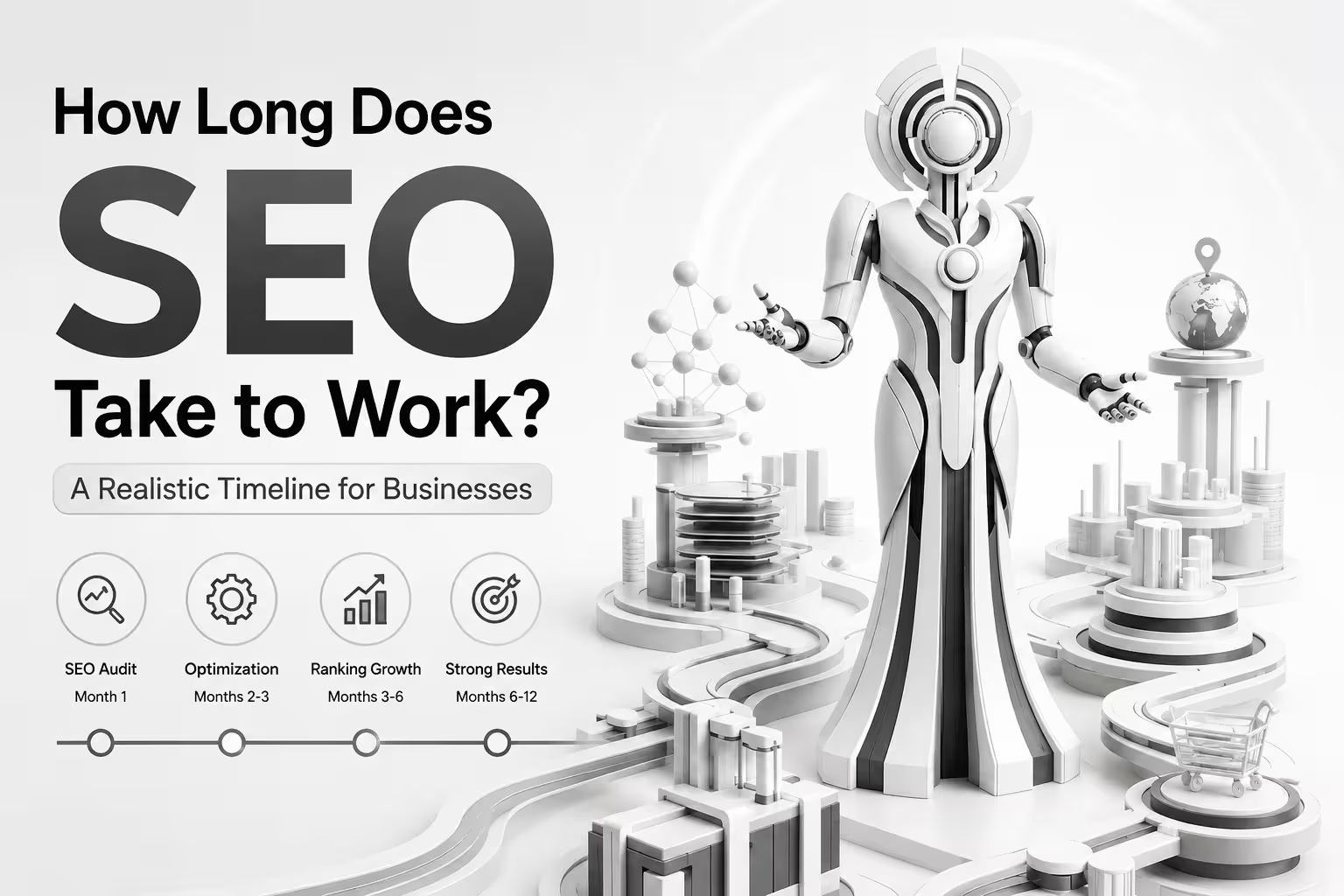
While every website is different, the following timeline can provide a general framework.
Month 1: SEO Audit and Strategy
The first month is often focused on understanding the website and creating an SEO strategy.
Typical activities may include:
- Website SEO audit
- Technical SEO analysis
- Keyword research
- Competitor analysis
- Search intent analysis
- Website structure review
- Content analysis
- Internal linking review
- Performance analysis
At this stage, you may not see dramatic ranking increases.
The goal is to identify problems and opportunities and establish a clear direction for the campaign.
Months 2–3: Technical and On-Page Improvements
Once the strategy is established, SEO work can move into implementation.
This may include:
- Fixing technical issues
- Improving page titles
- Optimizing headings
- Updating existing content
- Improving internal links
- Optimizing images
- Improving page speed
- Fixing indexing problems
- Optimizing important landing pages
Some websites may begin seeing early improvements during this period, especially if they had significant technical or on-page problems.
However, these early changes should not be considered the final outcome of an SEO campaign.
Months 3–6: Content and Ranking Growth
As technical improvements are combined with content optimization and other SEO activities, more pages may begin gaining visibility.
During this stage, you may notice:
- More search impressions
- Rankings for additional keywords
- Improved positions for existing keywords
- Increased organic traffic
- More visibility for long-tail searches
The pace of growth depends heavily on the competition and the strength of the website.
New websites may need more time to establish authority, while established websites with existing search visibility may see improvements sooner.
Months 6–12: Stronger Organic Growth
With consistent SEO work, some businesses may begin seeing more meaningful organic growth over a longer period.
At this stage, the focus should move beyond individual rankings and toward overall business performance.
You may see improvements in:
- Organic traffic
- Keyword visibility
- Important page rankings
- Leads
- Enquiries
- Ecommerce sales
- Organic conversions
However, highly competitive industries can require continued SEO investment beyond the first year.
SEO is not something that necessarily ends once a website reaches page one.
Competitors continue publishing content, improving their websites, and building authority.
What Factors Affect SEO Results?
The answer to how long does SEO take depends on several important factors.
1. Website Age
New websites generally have less history and authority than established websites.
This does not mean a new website cannot rank, but it may need more time to establish credibility and visibility.
An established website with a strong history and existing backlinks may have a different starting point.
2. Competition
Competition is one of the biggest factors affecting SEO results.
Ranking for a highly competitive keyword can be much more difficult than ranking for a specific long-tail keyword.
For example:
is likely to be more competitive than a highly specific local or niche search term.
Your SEO strategy should consider the competitive landscape before setting expectations.
3. Website Quality
The overall quality of your website matters.
Search engines need to be able to crawl, understand, and index your content effectively.
A website with:
- Technical problems
- Poor navigation
- Thin content
- Slow performance
- Weak internal linking
- Poor mobile usability
may require more foundational work before significant growth can occur.
4. Content Quality
Useful and relevant content can help a website compete for search visibility.
However, simply publishing a large number of articles does not guarantee results.
Content should:
- Match search intent
- Answer users’ questions
- Provide useful information
- Demonstrate relevant expertise
- Be easy to read
- Offer something valuable to the audience
Quality and relevance are more important than publishing content just for the sake of increasing page count.
5. Backlink Profile and Authority
Relevant backlinks can contribute to a website’s authority.
A new website with very few external references may need time to establish authority, particularly in competitive industries.
However, link quality matters.
A small number of relevant, trustworthy links can be more valuable than large numbers of irrelevant or low-quality links.
6. Technical SEO
Technical issues can prevent search engines from properly accessing or understanding your website.
Problems involving:
- Crawlability
- Indexing
- Redirects
- Canonical URLs
- Site architecture
- XML sitemaps
- Mobile usability
- Website performance
can affect SEO progress.
Fixing serious technical problems can sometimes produce relatively quick improvements, but technical SEO should be viewed as an ongoing process.
7. SEO Consistency
SEO works best when optimization is consistent.
Publishing useful content once and then abandoning the website is unlikely to produce the same results as a structured, ongoing SEO strategy.
Regularly reviewing:
- Content
- Rankings
- Technical health
- Competitors
- Search trends
- Internal links
can help maintain and improve performance.
Does SEO Work Faster for Existing Websites?
It can.
An established website may already have:
- Indexed pages
- Organic traffic
- Backlinks
- Search visibility
- Brand recognition
- Existing authority
This gives SEO professionals more data and an existing foundation to work with.
For example, if an existing page ranks on the second page for an important keyword, improving its content, structure, relevance, and internal linking may help it become more competitive.
By comparison, a brand-new website may need to build its foundation first.
This is not a guarantee of faster results, but the starting point can make a significant difference.
New Website vs Established Website SEO Timeline
New Website
A new website may need to focus on:
- Technical setup
- Website architecture
- Indexing
- Keyword targeting
- Content creation
- Internal linking
- Authority building
- Brand visibility
Because there is less historical data and authority, growth may take longer.
Established Website
An established website may already have:
- Existing rankings
- Organic traffic
- Backlinks
- Indexed content
- Historical search data
SEO efforts can therefore focus on identifying underperforming pages, fixing technical problems, expanding content, and improving existing rankings.
Local SEO Timeline
Local SEO can follow a somewhat different path from national or international SEO.
A local business may benefit from:
- Google Business Profile optimization
- Local landing pages
- Customer reviews
- Local citations
- Local content
- Relevant local links
- Website optimization
Some local improvements may become visible relatively quickly, while competitive local markets can require ongoing work.
For example, ranking for a specific service in a smaller market may be easier than competing for the same service in a major metropolitan area with many established businesses.
Ecommerce SEO Timeline
Ecommerce websites can have hundreds or thousands of pages.
This creates additional SEO challenges.
An ecommerce SEO strategy may involve optimizing:
- Product pages
- Collection pages
- Category pages
- Product descriptions
- Internal links
- Images
- Filters
- Technical URLs
- Structured data
SEO results may vary significantly across different product categories.
Some products may begin receiving organic visibility sooner, while highly competitive commercial keywords can take much longer.
Why SEO Results Are Not Immediate
SEO is different from paid advertising.
With paid advertising, you can often launch a campaign and start receiving traffic relatively quickly.
SEO involves improving the website’s ability to compete in organic search results.
Search engines need to:
- Discover your pages
- Crawl them
- Process and understand the content
- Evaluate the pages against competing results
- Determine where they should appear
These processes do not happen instantly.
Additionally, SEO is competitive.
If your business improves its website, competitors may be improving theirs at the same time.
Early SEO Results You Should Watch
Many businesses make the mistake of looking only at keyword rankings.
But rankings are not the only indicator of progress.
Early signals can include:
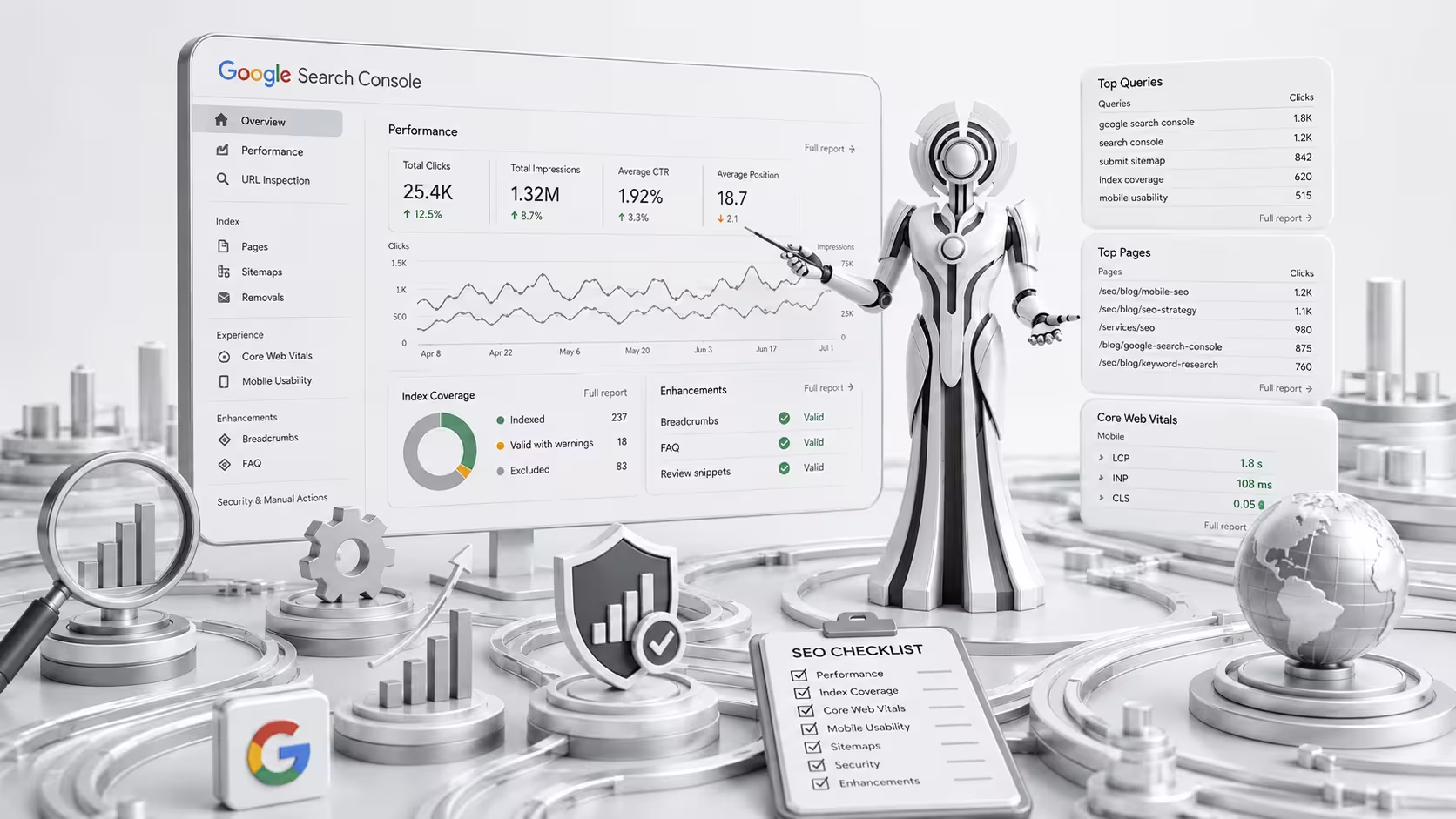
Increased Search Impressions
Your pages may begin appearing for more searches.
More Keywords
Your website may start ranking for additional relevant queries.
Improved Average Positions
Existing keywords may gradually move toward higher positions.
Increased Organic Clicks
More people may begin visiting your website through search results.
Better Engagement
Visitors may spend more time exploring relevant pages and taking useful actions.
These indicators can help show whether your SEO strategy is moving in the right direction.
SEO Rankings vs Business Results
Ranking on Google is not the final goal.
A website can receive thousands of visitors but generate very few leads or sales.
On the other hand, a smaller amount of highly targeted traffic can produce significant business value.
For this reason, businesses should track:
- Qualified organic traffic
- Leads
- Enquiries
- Phone calls
- Sales
- Revenue
- Conversion rate
Your SEO strategy should ultimately support your business objectives.
How to Speed Up SEO Results
There is no legitimate shortcut that guarantees faster rankings.
However, you can improve the efficiency of your SEO strategy by focusing on the right priorities.
Fix Major Technical Problems
Resolve issues that prevent important pages from being crawled or indexed.
Target Realistic Keywords
Do not focus exclusively on the most competitive keywords.
Target a mixture of relevant terms based on search intent, competition, and business value.
Improve Existing Content
Pages that already receive impressions or rank moderately well may offer valuable opportunities for improvement.
Create Helpful Content
Publish content that genuinely answers questions and supports the needs of your target audience.
Strengthen Internal Linking
Connect related pages so users and search engines can discover important content more easily.
Build Relevant Authority
Earn high-quality backlinks and mentions through useful content, relationships, digital PR, and legitimate industry activities.
Monitor Performance
Use reliable SEO data to identify what is working and where improvements are needed.
SEO Strategies That Can Delay Results
Some approaches can make SEO less effective or create unnecessary problems.
Keyword Stuffing
Overusing keywords can make content unnatural.
Low-Quality Content
Publishing large quantities of unhelpful content does not automatically increase rankings.
Spammy Link Building
Low-quality or manipulative links can create risks rather than sustainable growth.
Constantly Changing Strategy
SEO requires consistency.
Changing direction every few weeks makes it difficult to determine which actions are actually producing results.
Ignoring Technical Problems
Building new content while serious technical issues remain unresolved can limit the performance of the entire website.
How to Set Realistic SEO Expectations
A good SEO strategy should establish realistic goals before work begins.
Instead of saying:
“We will rank #1 in 30 days.”
focus on measurable objectives such as:
- Increase organic impressions
- Improve rankings for target keywords
- Increase qualified organic traffic
- Improve important landing pages
- Generate more organic leads
- Increase ecommerce conversions
This creates a much more useful way to evaluate SEO performance.
How Often Should SEO Progress Be Reviewed?
SEO performance should be monitored regularly, but you should avoid making major decisions based on a few days of data.
Search rankings can fluctuate naturally.
A monthly or quarterly review can help you identify broader trends.
During reviews, examine:
- Organic traffic
- Search impressions
- Click-through rates
- Keyword rankings
- Indexed pages
- Conversions
- Technical issues
- Content performance
- Competitor activity
Use the data to refine your strategy rather than reacting to every small ranking fluctuation.
Frequently Asked Questions About SEO Results
How long does SEO take to work?
SEO can take several months to produce meaningful results, but the exact timeline depends on competition, website quality, content, authority, technical health, and the SEO strategy being used.
Can SEO work in one month?
Some improvements can happen within the first month, particularly after fixing major technical or on-page issues. However, significant and sustainable organic growth generally requires more time.
Why is my website not ranking after months of SEO?
Possible reasons include strong competition, weak content, technical problems, poor keyword targeting, insufficient authority, indexing issues, or an ineffective SEO strategy.
A detailed SEO audit can help identify the specific problems.
Can anyone guarantee Google rankings?
No legitimate SEO provider can guarantee a specific Google ranking position. Search results depend on many factors and can change over time.
Is SEO worth the investment?
For many businesses, yes. SEO can provide a long-term source of relevant organic traffic, leads, and sales. The value depends on your industry, competition, business model, and the quality of your SEO strategy.
Does SEO need to be done continuously?
Yes. Search results, competitors, websites, and user behavior constantly change. Ongoing SEO helps businesses maintain and improve their organic visibility.
Final Thoughts
So, how long does SEO take?
There is no single answer.
For some websites, early improvements may appear within a few months. For others, especially those targeting highly competitive keywords, meaningful results can take longer.
The most important thing is to avoid unrealistic promises and focus on steady progress.
A successful SEO strategy combines technical optimization, useful content, keyword research, internal linking, authority building, and continuous performance monitoring.
Instead of asking only when your website will reach the first page, ask whether your website is becoming more visible, more relevant, more useful, and more effective at generating business results.
SEO is a long-term investment. When approached strategically and consistently, it can become a valuable source of sustainable organic traffic, leads, and revenue.
Good SEO takes time—but the goal is to build results that continue delivering value long after individual optimizations are completed.